
People type “how many blog posts before SEO traffic starts” into Google hoping for a number. Ten, twenty-five, fifty. The articles that come up are happy to supply one, and they rarely agree.
The honest answer is messier. Nothing Google has published points to a post count that turns search traffic on. What changes over the first months is whether Google has found your pages, figured out what they cover, and decided one of them deserves a spot for a search like “how to repot a snake plant.” More posts help with that, but other things decide how fast it happens.
Do You Need a Certain Number of Posts to Get SEO Traffic?
No. Google ranks individual pages, and it doesn’t count your posts and turn traffic on at post number 25. A post can get its first clicks a few weeks after it goes live, or get none for a year, whether it’s your third post or your three-hundredth. Your whole site counts too, for example how many other sites link to it, but nothing Google has described works like a post-count trigger.
What more posts do give you is more chances. Ten posts aimed at ten different questions are ten pages that could rank. One post is one page. That’s the reasoning behind most advice to publish more, and it’s why “how many posts do I need” never gets one clean answer. The count alone doesn’t tell you much. Ten posts aimed at searches that giant sites already own can sit at zero for a year, while three posts that answer narrow questions can get their first clicks within weeks.
Does Publishing 50 Posts Increase Your Traffic by 77%?
The number turns up in guide after guide: around 24 posts brings roughly 30% more traffic, and 50 or more brings roughly 77% more. The brackets change from site to site (21 to 54 posts, 24 to 51, 51 to 100), which suggests people are copying the figures from each other without checking them.
They’re usually credited to HubSpot analyses from around 2011 and 2012. Those compared the traffic of over a thousand companies that used HubSpot’s marketing software, most of them small businesses. MarketingProfs’ summary of the 2012 report, for example, says companies that went from 11–20 published posts to 21–50 saw an average traffic increase of 45%. The original report behind the 30% and 77% versions is hard to find, and most pages that quote them are quoting each other.
Even if the original numbers are accurate, they answer a different question than yours. Picture two companies in that data. One has 120 posts and a lot of traffic. It has also been online for eight years, sells to thousands of customers, and has other sites linking to it. The other has 30 posts and less traffic, and launched last year. Their post counts differ, but so does nearly everything else, so there’s no way to tell which difference caused the traffic. Companies like these also have customers, email lists, and brand names, so some of their visitors probably never came from search at all.
Take the percentages as a sign that sites with more content tend to have more traffic. Nobody disputes that. They can’t tell you what your 50th post will do.
What Your First Few Months Look Like on a New Site
Before a post can rank, Google has to find it and add it to its index, the database it pulls search results from. For a new page that can take anywhere from a few hours to several weeks. So if you publish a post and check your ranking that same afternoon, you won’t learn anything yet.
Once Google has indexed your pages, they’ll probably get almost no visitors for the first few months. A post might appear in results for a few searches, far down the list, and its position can jump around from week to week. Google has said it usually takes four months to a year of SEO work to see results, and that rankings move around more during a site’s first year. Semrush covers both points in its guide to SEO timelines. Many SEOs call this waiting period “the sandbox,” and whether or not Google has a formal filter for new sites, the wait is real.
The numbers for individual pages look worse. An older Ahrefs study, cited in Rank Math’s guide to SEO results, found that only about 5.7% of new pages reached page one of Google within a year. That figure includes pages of every quality, many written with no real search in mind, so don’t read it as your odds. It does show why a slow first few months is normal.
If you’re building an affiliate site, the post on how long affiliate marketing takes to make money covers the same wait from the income side and says to expect 12 to 18 months before organic traffic builds.
Why One Site Gets Traffic at 10 Posts and Another Gets None at 30
Start with what each post is aiming at. Say you run a food blog. Thirty posts aimed at “healthy recipes” and “easy dinner ideas” are up against giant sites with years of links behind them. Ten posts that each answer one narrow question, like “how to keep guacamole from turning brown,” are usually up against fewer pages, and smaller ones. Searches that specific are called “long-tail keywords,” and they’re usually where a new site gets its first clicks.

Then there’s how the posts fit together. A site with ten posts that all cover beginner woodworking looks like a place to go with woodworking questions. A site with ten posts on ten unrelated subjects looks like nothing in particular. SEOs call the first kind “topical authority.”
Links from other sites count too. Say a popular running site links to your post “How to Train for a First Half Marathon.” Google reads that as a recommendation, and a new blog usually has almost none of those yet.
The most basic reason is also the easiest to miss: some posts never got indexed. A blog can have 30 published posts and 12 that Google never added, in which case the real count is 18, and the cause may be a setting or a technical error rather than the writing. The check for this is free and takes a few minutes, covered below.
Getting indexed isn’t enough, either. If someone searches “how to keep guacamole from turning brown,” Google tries to show the pages that solve it best. A quick 300-word post written just to add to your total tends to lose to a page with real steps and photos.
How Many Posts and How Many Months to Plan For on a New Site
So how many blog posts before SEO traffic starts? Nobody can give you an exact number, but you can still plan around a rough one. Common advice is to have 10 to 15 posts live early. Google’s own comments point to four months to a year before results, and some SEO guides say narrow searches can start showing impressions at around two to three months. Put those together and here’s a plan for a new site: publish 15 to 20 posts on one subject, and give it six months from your first post before you decide something is wrong.
Here’s what that looks like on a calendar. If you publish one post a week, you’ll have 15 posts by week 15 and about 26 by the end of month six. If you publish two a week, you’ll hit 15 posts in under two months, as long as each one gives a real answer to the question it’s aimed at. Fifteen rushed posts won’t beat eight good ones.
Treat these as rough numbers, not a guarantee. A site that gets linked to early, or sticks to narrow questions nobody has answered well, can move faster. A site going after popular searches against big names can take longer than a year. And if you’re counting posts but not months, it’s easy to quit at month three.
How to Check If Google Is Showing Your Posts in Search Results
Google Search Console is free and answers this directly. Once you’ve added your site and verified that you own it, open the “Performance” report. It lists the searches your pages appeared for. Two numbers are there from the start. “Impressions” counts how many times a post appeared in someone’s search results, whether or not they clicked. “Clicks” counts the visits.
A third number, “Average position,” isn’t turned on at first. Click the “Average position” box above the chart and a position column appears in the table. It tells you where your post sat in the results: positions 1 to 10 are page one, and 11 to 20 are page two.
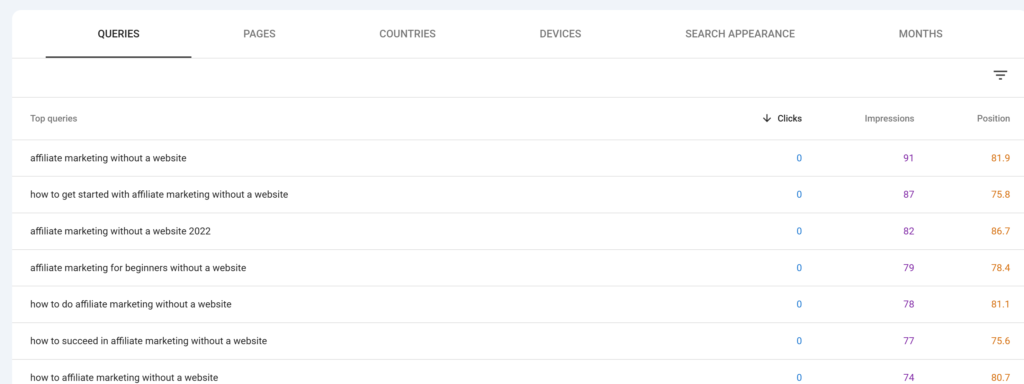
Say you published a post on “patching drywall” two months ago. Click the “Pages” tab and then that post’s address, and the numbers above the chart now belong to that post alone. They show 60 impressions, 0 clicks, and an average position of 34. That means Google has indexed the post and is showing it around page four for a few searches. You have no traffic yet, but the post is in the system, and the “Queries” tab lists the searches Google thinks it fits. If those match what you wrote about, wait. If they don’t, your title and opening paragraph may need rewording.
To check a single post, paste its address into the “URL Inspection” box at the top of Search Console. It tells you whether the post is in Google’s index and lets you request indexing if it isn’t. If a post is still missing after a few weeks, look for a “noindex” setting (an instruction that tells Google to skip the page) or a crawl error.
What to Do While You Wait for Traffic
Keep publishing on the same subject. Posts on related questions help each other, and every new one is another page that could rank. Link each new post to the older ones it relates to, then go back and link those older posts to the new one. The post on internal linking for small blogs shows how to do that without overdoing it.
Don’t count on Google for your first readers. Search traffic is slow at the start, so you’ll need another way to get people to your first posts. The post on how to get your first 1,000 visitors lays out the options.
Check Search Console every week or two, not every day. Daily numbers on a new site bounce around too much to read anything into. When a post starts picking up impressions, look at which searches they come from. If your drywall post is appearing for “how long does drywall mud take to dry,” make sure its opening paragraph answers that directly.
Next time a guide answers “how many blog posts before SEO traffic starts” with a single number, check where the number comes from. Pick one subject, publish 15 to 20 posts on it, and plan to look at your results six months after your first post. Put that date on your calendar now, because a slow third month is normal and shouldn’t be what decides when you quit.
How many blog posts do you need before SEO traffic starts?
There’s no set number. A post that answers a narrow question, like “how to keep guacamole from turning brown,” can get its first clicks within weeks, while a post aimed at “healthy recipes” can sit at zero for months. If you’re starting a new blog, aim for 15 to 20 posts on one subject, then look at your results six months after your first post.
How long does it take for a new blog to get traffic from Google?
Google has said it usually takes four months to a year of SEO work to see results. Some SEO guides report first impressions on narrow, low-competition searches at around two to three months, and popular topics can take longer than a year.
How can you tell if Google has indexed your blog posts?
Paste the post’s address into the “URL Inspection” box in Google Search Console, which is free. It tells you whether the post is in Google’s index and lets you request indexing if it isn’t. The “Performance” report then shows how many times your pages have appeared in search results.