How do affiliate programs track sales? Most beginner guides skip the answer entirely: they jump straight to ‘pick a niche’ and ‘create content’ without explaining the mechanism that determines whether you get paid. That’s a problem, because the tracking layer is where a lot of commissions quietly disappear.
The mechanics aren’t complicated once you see them laid out. Knowing how they work makes it easier to choose programs and to troubleshoot when something looks off in your dashboard.
Your Link Is a Signal
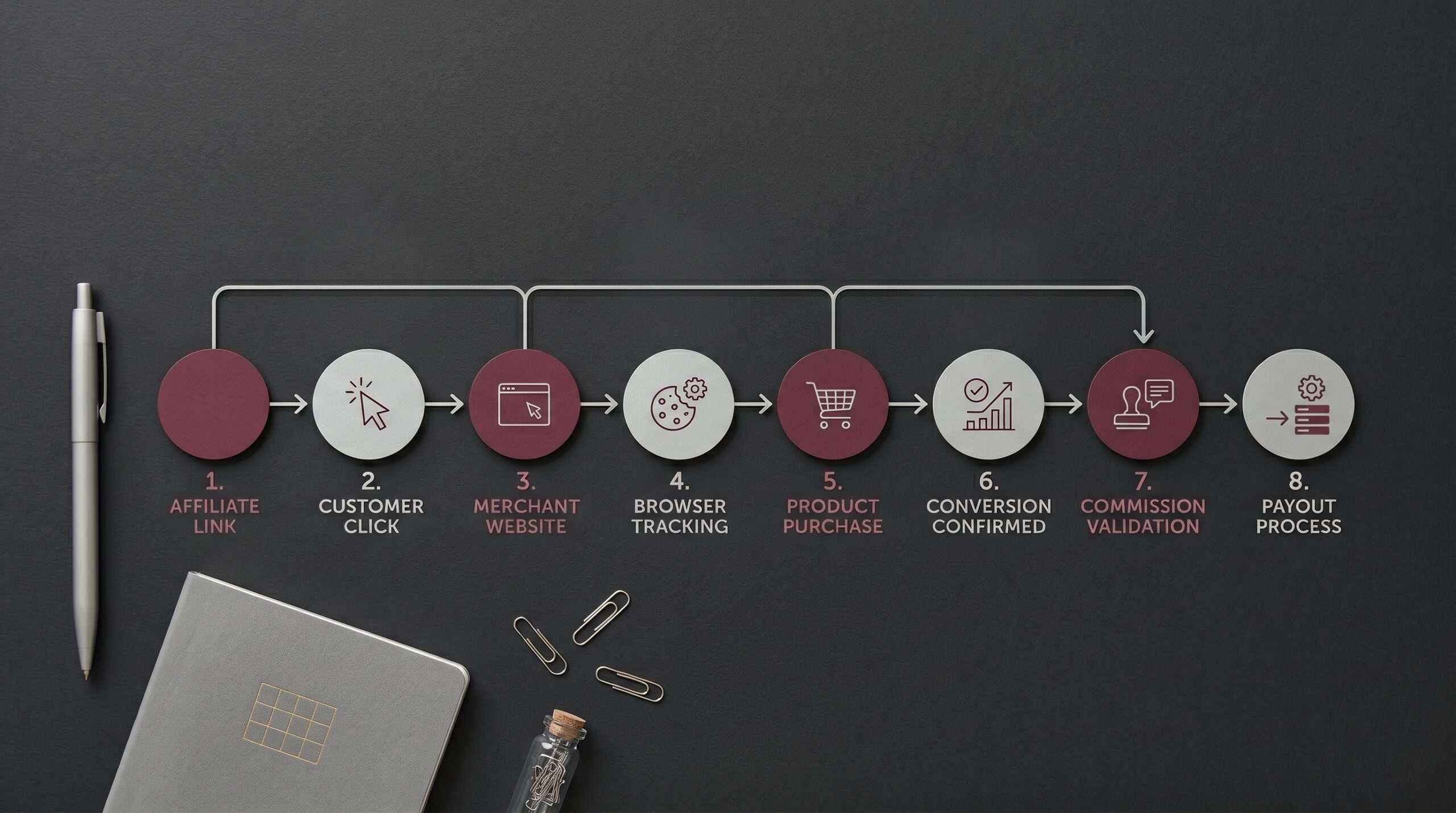
When you join an affiliate program, you’re given a unique link. That link contains identifiers that tell the merchant’s system a specific affiliate sent this visitor. When someone clicks your link and eventually completes the required action (a purchase, a sign-up, a form submission), the system matches that action back to your identifier and records the commission.
The tricky part is keeping track of that visitor between the click and the eventual purchase. They might browse around, leave, come back later, switch devices: exactly the kind of behavior you’d expect from someone deciding whether to buy the $80 course you just told them about. That’s where the different tracking methods come in, and why they’re not all equal.
Cookie Tracking: The Most Common Method
The most common answer to how do affiliate programs track sales is cookies. The majority of programs use cookie-based tracking: when someone clicks your affiliate link, a small file (the cookie) gets stored in their browser. That cookie contains your affiliate ID. When the visitor eventually makes a purchase, the merchant’s system reads the cookie and credits the sale to you.
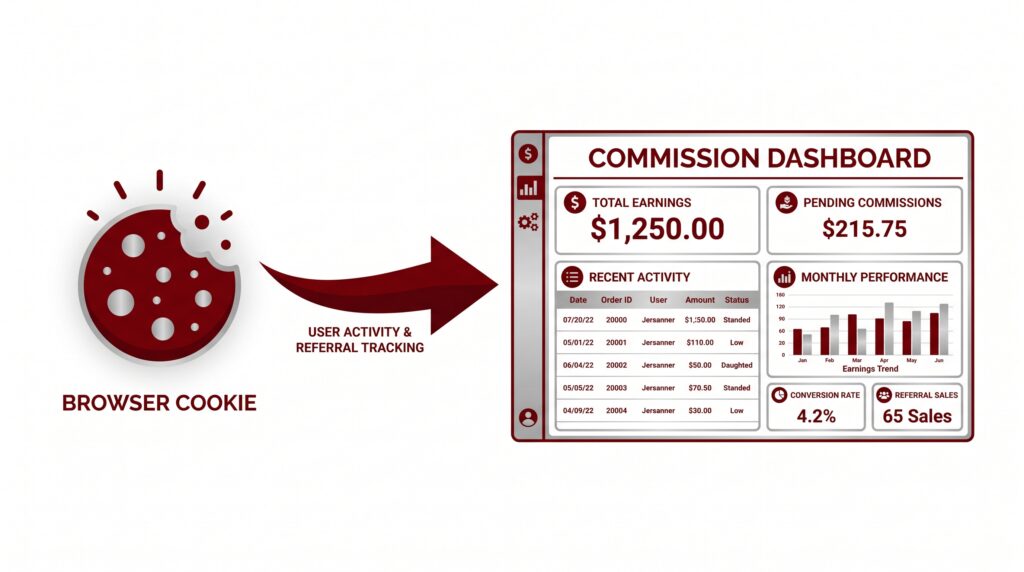
Cookie duration is the detail to watch: how long that cookie stays active before it expires. Programs vary significantly here:
Amazon Associates, the largest affiliate program in the world, uses a 24-hour cookie. Click on Monday, buy on Wednesday — you get nothing, even if your review was the reason they decided to purchase. That’s a short window for anything that requires comparison shopping.
Most other programs use 30-day cookies. Some use 60 or 90 days. A handful of software affiliate programs offer 365-day cookies or lifetime attribution, meaning you get credit for any future purchase from that customer, whenever it happens.
That’s especially true when buyers take time to decide: software subscriptions, expensive products, or anything people tend to research across multiple visits before pulling the trigger.
What Can Go Wrong with Cookies
Cookie tracking is reliable under normal conditions, but there are a few real ways it can go wrong.
The most common issue is overwriting. When a buyer clicks multiple affiliate links before purchasing, most programs use last-click attribution: the most recent cookie wins. If someone clicks your link, then clicks a competitor’s link an hour later, you lose the sale even though you introduced the product first.
Browser privacy settings are getting stricter. Safari and Firefox both limit how long tracking cookies can stay active. A visitor browsing in private mode typically generates no cookie at all.
And some users just clear their cookies regularly, which wipes the attribution regardless of everything else.
None of this means cookie tracking is broken: it’s still the dominant method and works well enough for most affiliates. But it’s why your commission reports sometimes come up short compared to how many people you’re sending — the gap isn’t the program cheating you, it’s just the internet being the internet.
Server-Side Tracking: More Reliable, Less Common
Some programs skip cookies entirely and track sales server-to-server instead. Instead of storing anything in the visitor’s browser, the merchant just tells the affiliate platform directly when a sale happens, no cookie required.
This approach sidesteps most of the cookie problems above. Browser privacy settings don’t affect it, and ad blockers can’t interfere with it either, because nothing happens in the browser at all.
The trade-off is that it’s more complicated to set up, usually requiring a dedicated tracking platform. For most content site affiliates using standard program links, cookies are what’s in play. The server-side approach shows up more often on the paid-ads side of affiliate marketing — someone spending real money per click wants a tracking method that doesn’t quietly lose 10% of it to a browser setting.
Fingerprinting: The Backup Method
A growing number of programs use device fingerprinting as a backup when cookies fail. It works by piecing together a handful of details about the visitor (browser type, screen size, operating system, IP address) into something close to a fingerprint, one that can be recognized again on a later visit without ever touching a cookie.
Fingerprinting is more privacy-invasive than cookies and sits in a legal gray area depending on where you are. That’s usually why it’s a backup, not the main method. For affiliates, the point is simple: some programs catch sales that cookie-only tracking would otherwise miss. Not all, but some.
What This Means When Choosing a Program
Cookie duration should be one of the first things you check when evaluating a program. A 20% commission rate with a 24-hour cookie can convert worse in practice than a 12% commission with a 90-day cookie, depending on the niche and how long buyers typically take to decide.
When more than one affiliate is involved, who gets the credit isn’t always obvious. Most programs give the win to whoever was clicked last, which favors content that shows up near the end of someone’s decision, like comparison posts or discount searches. If your content is more about introducing people to a product earlier on, you’re working against that system a little. First-click credit is much rarer.
Returning customers are the other thing to look at. Some programs only pay on first-time purchases. Others, particularly software subscription programs, credit recurring commissions for the lifetime of the customer. Over time, that difference adds up — a recurring-commission program can end up paying more than a one-time program with a higher rate.
What to Do When a Sale Doesn’t Track
It happens. Someone emails to say they purchased through your link but the commission isn’t showing up. Before assuming the program is shady, run through the most common causes first.
The most frequent culprit is device switching — they clicked your link on their phone, thought about it, then purchased on their laptop. Unless the program uses cross-device tracking, that chain breaks.
Ad blockers and privacy-focused browser extensions can block the script that’s supposed to fire when someone finishes checking out. Some checkout processes also lose the tracking info by accident when they bounce the customer through several domains to complete the purchase.
If this keeps happening, not just once but regularly, contact the program’s affiliate support team. Most reputable programs have a way to review disputed sales manually, and a consistent pattern of missing commissions is something they want to know about too.
So how do affiliate programs track sales, in plain terms? Mostly cookies, sometimes a server-side connection, occasionally a fingerprint as a backup — and which combination a program uses decides how much of the traffic you send actually turns into money you get paid for. None of it is secret. Most affiliates just never bother to check until a commission goes missing.
The next post looks at what a content site is, the affiliate model this site is built around, and how the tracking mechanics here fit into a longer-term income plan.
What is cookie duration in affiliate marketing?
Cookie duration is how long an affiliate tracking cookie stays active in a visitor’s browser after they click your link. If they purchase within that window, you earn the commission. Common durations range from 24 hours (Amazon Associates) to 30, 60, or 90 days for most other programs.
Why didn’t I get credit for an affiliate sale?
The most common reasons are: the buyer used a different device than the one they clicked your link on, their browser blocked or deleted the tracking cookie, or another affiliate’s link was clicked after yours. Some programs have a manual review process for disputed attributions.
What is last-click attribution in affiliate marketing?
Last-click attribution means the affiliate whose link was clicked most recently before a purchase gets full credit for the sale. It’s the most common model in affiliate marketing. It favors affiliates whose content appears late in the buyer’s research process — comparison posts, reviews, and discount searches.