What is a content site in affiliate marketing? At its simplest: you publish articles, people find them through Google, and some of those people click an affiliate link or see an ad. That’s the whole model in one sentence, which also makes it sound a lot simpler than it actually is. What decides whether it works is everything underneath that sentence: how you build it, how long it takes to pay off, and what you’re left with once it’s running.
The term gets lumped in with ‘niche site’ and ‘authority site’ a lot, like they’re basically the same thing. They’re not quite, and there’s a real difference explained further down.
hepreneur runs on exactly this model, so think of this less as an outside explanation and more as a description of what’s running under the hood right now.
What Is a Content Site, and How Does It Work?
A content site in affiliate marketing works like this: you publish articles that answer specific questions people search for online. Google finds those articles and shows them to people typing in similar questions. Some of them click through, read the piece, and a portion of those go on to click an affiliate link or see an ad on the page. That’s where the money actually comes from.
The traffic comes from search engines: you’re not paying for clicks and you’re not dependent on a social following. Once an article ranks well, it can bring in visitors consistently for months or years without any additional work. That’s the ‘passive’ part people talk about. It doesn’t mean the article writes itself or the money shows up without any effort — it means the piece you wrote in month two is still quietly pulling in readers in month twenty, without you touching it again.
Content is the product itself here. You’re not selling anything directly. You’re publishing information that’s genuinely useful to readers, and you make money through recommendations, comparisons, and reviews built into that content, pointing readers toward things that relate to what they came to read.
What Kind of Content Does a Content Site Publish?
Most content sites publish a mix of two content types, and getting the balance right matters more than it looks like it should.
Informational content answers questions without a strong commercial angle: ‘how does X work,’ ‘what is Y,’ ‘why does Z happen.’ This earns backlinks, brings in readers who are still figuring things out, and gives the site credibility before it asks anyone to buy anything. It doesn’t convert to affiliate commissions directly, but it’s the foundation that makes the rest of the site credible.
The second type targets readers who are close to buying: ‘best X for Y,’ ‘X vs. Y,’ ‘is X worth it,’ ‘X review.’ These posts convert. The people clicking on them already know roughly what they want and are just comparing their options. A well-written comparison or review post is where most affiliate commissions come from.
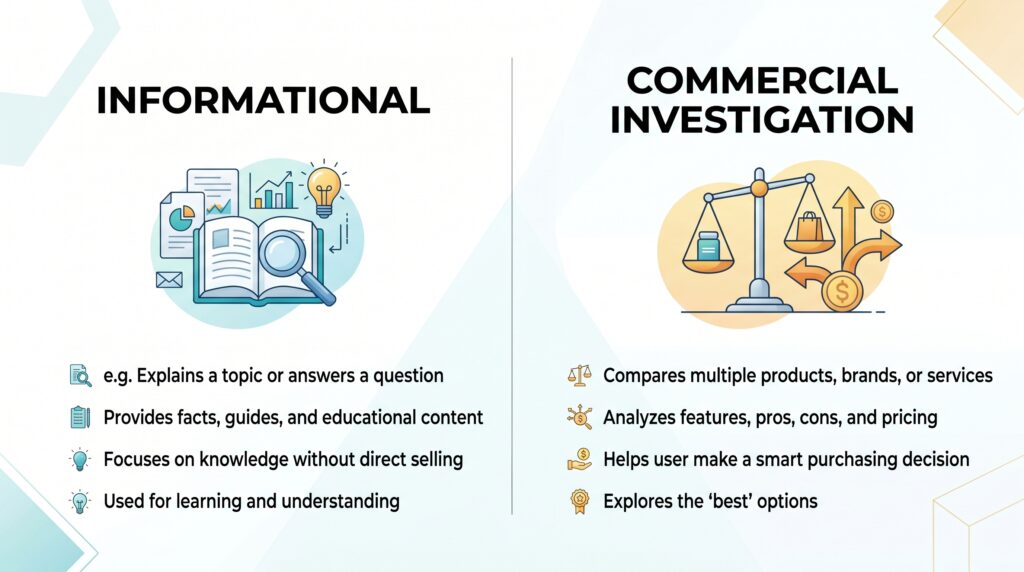
A site that only publishes informational posts can build a real audience and still barely make any money — lots of readers, almost no revenue. One that only publishes commercial content looks thin and struggles to rank. The right approach is a deliberate mix: enough informational depth to earn trust and rankings, enough commercial content to make money.
The Traffic Timeline Problem
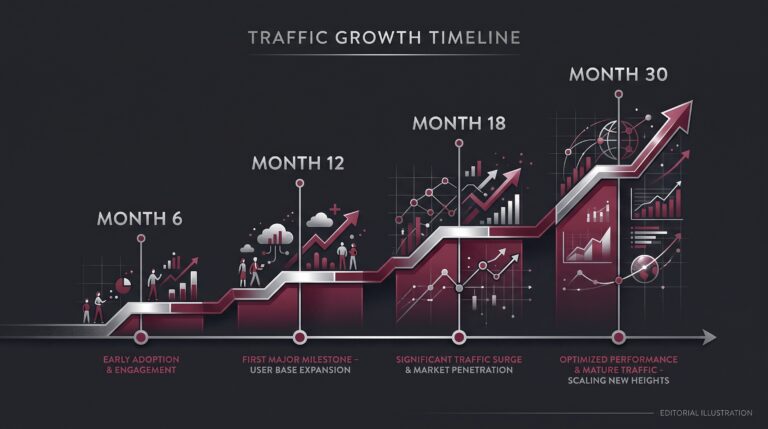
New content sites run into the same problem almost every beginner underestimates: organic search traffic doesn’t show up immediately. As covered in the post on how long affiliate marketing takes, most new sites spend 9–18 months in a low-traffic phase while Google gets familiar with the site, works through what’s on it, and slowly starts trusting it enough to rank it well.
Every content site runs into this. It’s just how organic search works for everyone. Phase 1 of building a content site is almost entirely investment: publishing content that won’t bring in much traffic for months, which is a strange way to spend a Saturday if nobody warned you beforehand. The sites that make it through this phase intact are the ones that knew the timeline going in.
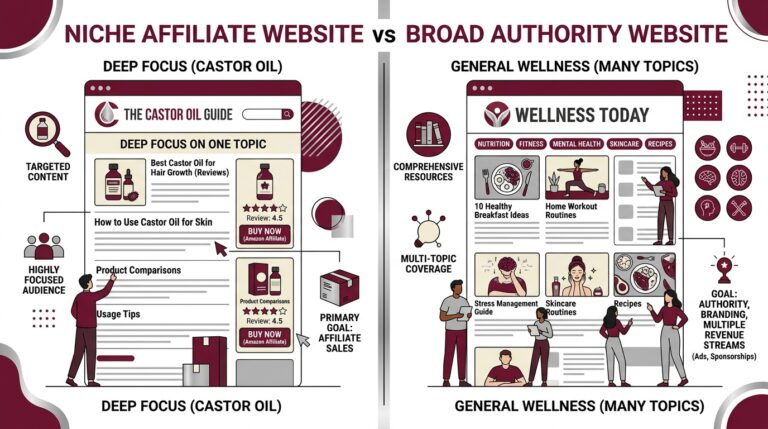
A new site ranks faster by picking one sub-topic within its niche and covering it in real depth before branching out. Take a fitness site: instead of covering everything from weightlifting to yoga to nutrition right away, it might start with running specifically (shoe reviews, beginner training plans, common injuries) before branching into strength training or nutrition later. That kind of focus signals real expertise to search engines a lot faster than covering everything at once does. Linking between related posts on that one sub-topic makes that even clearer to Google.
How a Content Site Makes Money
The two main ways a content site makes money are affiliate commissions and display advertising. They work differently enough to look at separately.
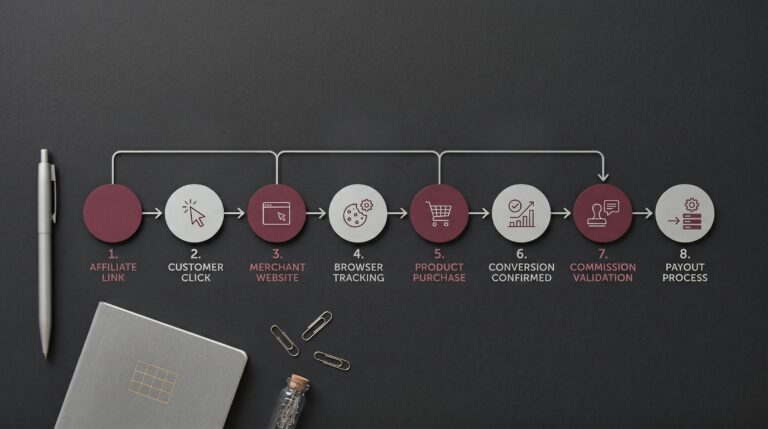
Affiliate commissions come from recommending specific products or services and earning a cut when a reader purchases through your link. Commission rates and cookie duration vary by program, covered in detail in the post on how do affiliate programs track sales. To make steady money from this, you need content aimed at people who are close to buying, and enough of them showing up to make the numbers work.
Display advertising (through Google AdSense at entry level, or Mediavine and Raptive once traffic thresholds are met) makes money from how many times an ad gets shown, not whether anyone buys anything. AdSense usually lands somewhere around $2–$8 RPM (revenue per thousand pageviews). Premium networks can reach $20–$40 RPM in the right niches — numbers that look encouraging right up until you do the math on how many thousand pageviews it takes to add up to rent. At those rates, display ads work better as a backup than as a new site’s main plan.
Most established content sites run both. Affiliate commissions usually make more money per visitor in commercial niches; display ads work more like a safety net that pays something no matter what kind of post it’s on, including the purely informational ones.
What a Content Site Is Not
Ask around and you’ll hear ‘content site,’ ‘niche site,’ and ‘authority site’ tossed around like they’re interchangeable. They’re not.
A content site isn’t the same as a personal blog. The posts exist because people are actively searching for those specific questions, not because the author found the topic interesting. It follows the reader’s questions, not the writer’s mood that week.
Social platforms are a different thing entirely. They need constant posting just to stay visible. A content site’s articles keep pulling in search traffic on their own once they rank. The two can work together: social channels can bring in traffic early while organic search builds in the background. But they do different jobs, and it’s easy to mix them up.
And it’s not a done-for-you system. Despite what a lot of MMO marketing suggests, there’s no shortcut around the content creation and the traffic timeline. Sure, AI tools can help you write faster — but running the whole thing through a shortcut like that is a good way to get a site penalized instead of ranked. A real content site works because genuine, useful content earns trust from both readers and search engines, and that trust can’t be bought or faked.
Why Build a Content Site in the First Place
Content sites come with a few genuine advantages that make the slow build worth it.
Old posts don’t stop working. A social media following needs constant feeding to stay alive — stop posting for two weeks and reach quietly dies. A content site doesn’t work that way: a post published 18 months ago can still be ranking and pulling in readers today, without you thinking about it once in between. Every post you publish adds one more door into the site that stays open, on top of everything that’s already working in the background.
It’s not free to build, but it’s close. The time investment is real. The money required is close to nothing: hosting, a domain, a basic theme. Compare that to income models that need inventory, equipment, or real money up front before you’ve earned a dollar.
The skills don’t disappear either. What you learn building one content site (how to research topics, structure content, understand what ranks and why) carries over to the next one. That’s not true of every online income approach.
So what is a content site in affiliate marketing? A website that earns through affiliate links and advertising, built on content that brings in search traffic over time. Getting there takes a while, and there’s no real shortcut. But once it works, it keeps working — quietly, in the background, long after you’ve stopped thinking about most of the posts doing it. That’s what makes it worth building.
Next up: the honest affiliate marketing timeline, including what the 12–18 month window looks like in practice and what decides whether a content site picks up speed or fizzles out.
What is a content site?
A content site is a website built around publishing articles that attract search traffic, then makes money from that traffic through affiliate commissions, display advertising, or both. Every post exists because people are actually searching for that specific question — not because of personal interest or what’s trending on social media.
How long does it take for a content site to make money?
Most content sites take 12–18 months before organic search traffic becomes strong enough to bring in consistent income. The first year is mostly an investment phase — publishing content that helps Google trust the site and rank it over time. Sites that go in understanding this timeline tend to actually stick around long enough to see it work.
What is the difference between a content site and a blog?
A content site is built around what people are actually searching for — every post answers a specific question people look up regularly. A personal blog is built around whatever the writer feels like saying. In practice, the affiliate blogs that actually succeed work like content sites: the posts exist because people are searching for them, not just because the writer felt like writing about it.