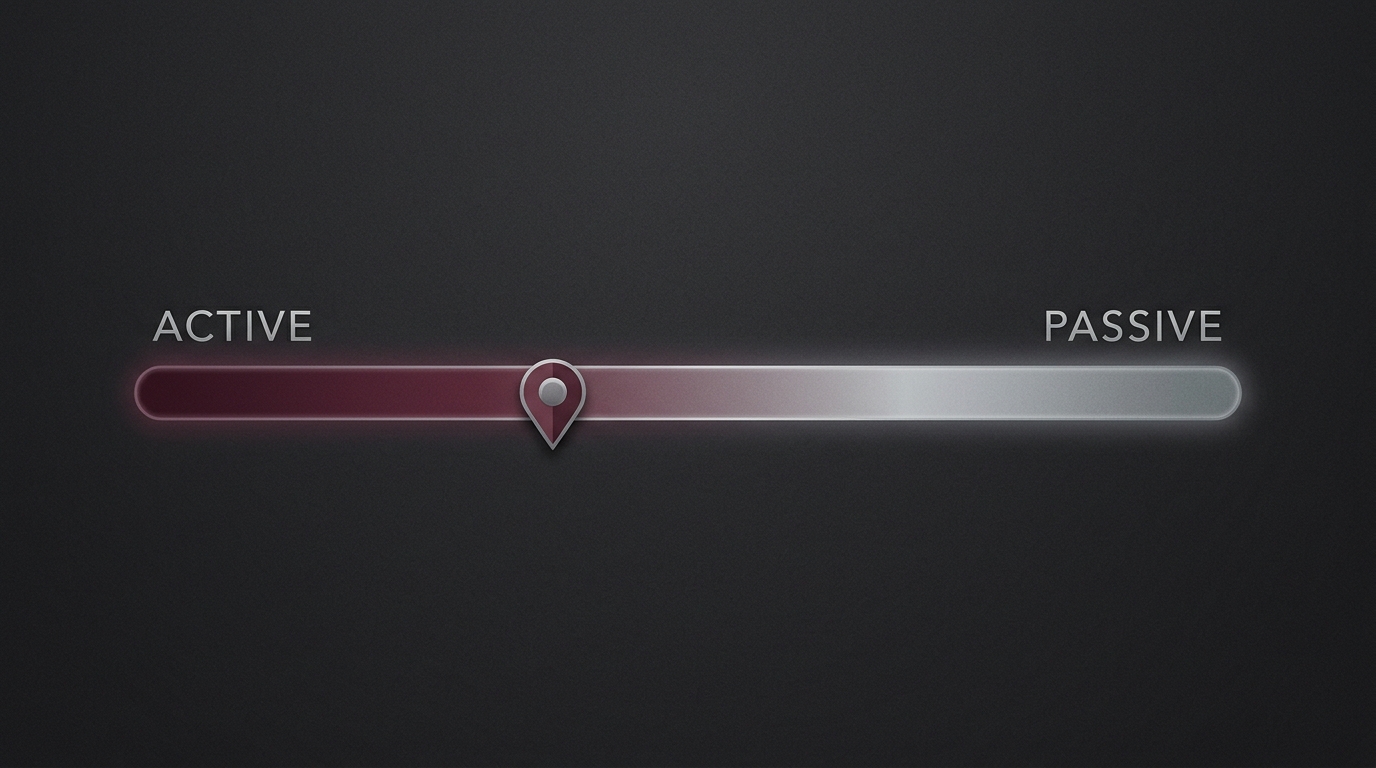
The difference between active and passive income online comes down to this: active income pays you for work you’re doing right now — stop working, and the money stops too. Passive income keeps paying after the work is done. That sounds like two clean categories, but most real online income sources don’t fit neatly into either one. A lot of what gets sold as passive income still requires ongoing work. MMO marketing rarely says so upfront.
That confusion is also why so many people quit. Someone builds a blog or a content site expecting the money to start coming in soon. Months pass with real work and nothing to show for it, and most people give up right around when it would have started working.
Online, that pattern plays out across a few different things you could build: a content site, an affiliate blog, a YouTube channel, a digital product. Whichever one you pick, the order stays the same: work now, get paid later.
What Counts as Active Income Online
Active income online is the category most people already understand instinctively, even if they’ve never used the term. Freelance writing, virtual assistant work, and consulting all fall into it. So does the kind of affiliate marketing that shows up on Instagram: promoting a product in a caption or story for a fee, rather than reviewing it once on a site and letting that review keep working. Each of these needs you to keep writing, keep posting, or keep consulting to keep getting paid. Stop working, and the money stops within days.
None of that makes active income bad. It’s usually faster to start and faster to earn from. The money is tied directly to the hours you put in this week, not to a blog post you publish today that might not rank in Google for eight months. The tradeoff is that you can only earn as many hours as you can personally work. There’s no version of freelance writing where you write one article and it pays you again every month for the next three years.
What Counts as Passive Income Online
Passive income online is real, but it works backwards from what the screenshots suggest: the work happens first, and the money comes after. A blog post takes real time to research and write before it earns anything. Scripting, recording, and editing a YouTube video eats just as many hours. Writing and packaging an ebook is no different. All of that is active work, every time, before any of it pays passively. Once it’s live, it can keep earning with only occasional attention instead of daily effort — that’s the passive part. It’s not maintenance-free forever, though: hepreneur’s passive income myth post gets into that part directly: an affiliate program changing its terms, for instance, and needing a new link swapped in.
Ranked content articles, evergreen YouTube videos, and digital products sold on autopilot through an existing audience are the closest things to genuinely passive income online. So is licensing: selling the rights to something you made once, like a photo, a font, or a design template, and getting paid every time someone else uses it. None of these run themselves completely: an outdated stat needs updating, a broken link needs fixing, here and there. Active income doesn’t get that kind of break. The work has to keep happening for the money to keep coming.
The Unpaid Work Nobody Mentions
This is the part passive income courses skip over: nobody selling one leads with the part where you write dozens of posts before the first one starts pulling traffic on its own. But that’s what’s happening: you put in the active work first, and the money comes later. Most people badly underestimate how long that setup phase takes.
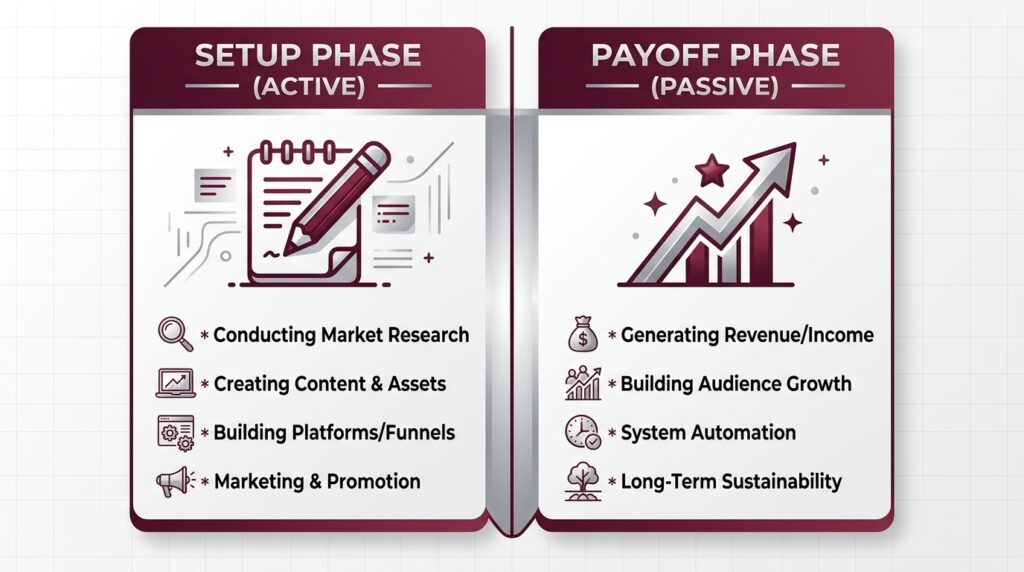
For a content site specifically, this works the same way the affiliate marketing timeline post describes: months of active publishing before organic search traffic starts doing the passive work on its own. That stretch usually runs a year or more. Publishing steadily for months with nothing to show for it doesn’t mean the model is broken — it means “passive” hasn’t started yet. It kicks in once the site has enough posts ranking to keep pulling traffic without you adding more.
How This Plays Out in Affiliate Marketing
The difference between active and passive income online is easiest to see in affiliate marketing through a content site, which is probably why so much MMO marketing holds it up as the go-to passive income example. It isn’t wrong, exactly — it’s just incomplete. Hepreneur’s breakdown of whether affiliate marketing pays off goes through those numbers directly, and none of them showed up without months of active, unpaid publishing first. That’s the part most pitches leave out.
Once a site has enough posts ranking and holding steady, the income does become genuinely passive. The older posts keep earning even when you’ve stopped adding new ones. The catch is what gets marketed as “passive income” almost never mentions how long that takes to reach. Someone who expects it in month two and doesn’t see it until month eighteen is likely to assume the whole thing failed, when really it just took longer than they were told. Not knowing that timeline ahead of time is a big part of why so many people quit before it ever kicks in.
Why Most Income Sources Are a Mix of Active and Passive
This is where the difference between active and passive income online gets blurry in practice. Hardly any online income source is purely one or the other. YouTube ad revenue technically continues after a video is published, but the algorithm rewards consistent uploads, so most channels end up working more like active income that only partly turns passive. Dropshipping looks passive from the outside — until a shipping delay turns into forty angry emails, which is active income wearing a very convincing disguise.
How active something still is right now, and how fast that’s shifting toward passive, tells you more than which single label it gets. Some income sources never really turn passive at all. Others take years to get there. Almost none of them start passive.
How Do You Want to Make Money Online?
The active/passive question matters most before you’ve built anything, right when you’re deciding what to start. If you need income in the next 60 days, active income is the realistic choice: freelancing, consulting, or any service work that pays for hours worked, because nothing passive pays out that fast no matter how it’s marketed. If you have more time before you need the money, a content site, a YouTube channel, or a digital product is worth a look instead. You’re trading a slower start for something that can keep paying once it’s built.
Most people who quit one of these never had a realistic timeline to start with — nobody told them how long the active part actually runs. Knowing that upfront is what actually stops people from quitting too early.
So in practical terms, the difference between active and passive income online comes down to this: active income pays you for time, passive income pays you for work you already finished. Most things people build online start out active and slowly turn passive if they last.
That’s the whole game: staying with the writing, recording, or building long enough for it to start paying passively. Every “passive income” screenshot you’ll ever see belongs to someone who did that part first — they just didn’t post about the eighteen months it took to get there.
The next post looks at affiliate marketing without a website — still a content site, just built differently, sitting in a slightly different spot on the same active/passive spectrum.
Is affiliate marketing active or passive income?
Affiliate marketing through a content site is active income at the start and becomes more passive over time. The early months require steady publishing with little return; once a site’s got enough posts up and holding steady in the rankings, older posts can keep earning with only occasional maintenance.
What is an example of truly passive income online?
Dividend investing is probably the best-known example — buy shares, and the payouts keep coming with no ongoing work. Within online income specifically, the closest equivalents are things like ranked evergreen content, an evergreen YouTube video, or a digital product sold through an existing audience. Each took genuine work to build, but then earns on its own afterward, without the ongoing effort active income needs.
Can online income ever be fully passive?
Rarely, and usually not permanently. Most online income models need occasional maintenance — updating outdated information, fixing broken links, or adjusting to platform changes — even after the heavy setup work is done. ‘Passive’ online almost always means ‘occasional,’ not ‘zero effort.’